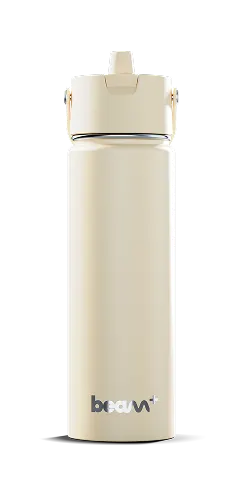
TL;DR
- The only bottle in this test that both sanitises the vessel with UV-C and physically filters what you pour in.
- The sour gym-bag smell never came back once during six weeks, without a single brush clean.
- Tap water tastes noticeably flatter and cleaner than from an unfiltered steel bottle, which changed how much I drank.
- Sold through UVBrite directly, so the deep discount is promotional rather than permanent.
Who it is for — and who it isn't
Good fit
- ✓ Travellers refilling from taps they do not know
- ✓ People who forget to clean bottles and hate the smell
- ✓ Anyone who drinks too little water because tap water tastes bad
- ✓ Gym, commute and job-site use where the bottle sits warm for hours
Skip it if
- ✗ Buyers who only ever fill from a home filter jug and clean daily
- ✗ People who refuse to charge anything, ever
- ✗ Users who need a 32 oz or larger bottle for long shifts
Specifications
| Capacity | 18 oz (approx. 530 ml) |
|---|---|
| Body | Double-wall vacuum insulated stainless steel |
| Sanitising | UV-C LED in cap, manual and automatic cycles |
| Filtration | 0.1-micron hollow-fiber filter in the drinking path |
| Charging | USB, roughly monthly in daily use |
| Guarantee | 30-day money-back guarantee |
Materials and build
The body is electropolished stainless steel with a matte powder finish that has not chipped despite being dropped on concrete twice. Weight sits in the middle of the category: heavier than a plastic filter bottle, lighter than a large insulated tumbler. The cap is the interesting part — the UV-C LED is recessed behind a lens so it never contacts water directly, and the filter unit threads into the straw path rather than sitting loose in the body. Gaskets are removable, which matters more than any marketing claim, because a non-removable gasket is where every bottle eventually starts to smell.
First week with it
Out of the box it charged in well under two hours. The first thing I checked was the flow rate, because filtered bottles are usually a chore to drink from. There is resistance, clearly more than an open straw, but it is closer to a thick smoothie straw than the hard suck of a squeeze-bottle membrane. The first UV cycle is oddly satisfying: a soft glow through the neck, a status light, done in about a minute. Within a week the habit had stabilised into: fill, cycle, drink, throw it in the bag and ignore it.
Where it actually fits in a week
On a five-day trip with two flights, I filled from airport fountains, a hotel bathroom tap and a rural café. No stomach trouble, and I bought zero plastic bottles. At the gym it earned its keep differently: after being left in a hot car for an afternoon, the water tasted stale but the bottle itself did not smell, which is the failure mode that usually makes me retire a bottle. On a day hike I filtered from a moving stream and, having let a sediment-heavy scoop settle first, the flow rate did not degrade. Around the house it mostly replaced my filter jug, which was not something I expected.
What the evidence supports
Two claims are worth separating. The UV-C side is well-established physics: short-wavelength ultraviolet light disrupts microbial DNA and is used at municipal scale. In a bottle, its real value is keeping biofilm from establishing on the walls and cap, which is exactly what I observed — no smell across six weeks with no scrubbing. The filtration side rests on the 0.1-micron rating, which is the standard threshold at which bacteria and protozoa are physically excluded. What neither stage claims is dissolved-metal removal, and I would not treat any bottle as a lead solution. Judge it on what it is: hygiene plus taste, in one container.
Cleaning and durability
Practical routine: run a manual cycle after any unfamiliar refill, let the automatic cycle handle the hours in a bag, and pull the gasket and straw once a week for a rinse. Soap and hot water are still the right answer after anything that is not water. Charge monthly. The filter is a consumable and should be swapped on the published interval; keeping a spare in the same pouch as the cable is the difference between using the bottle for years and abandoning it in month three.
Price and guarantee
Full price is $75.00, and at that number I would tell you to think hard. The current single-bottle promotion is 25% off, bringing it to $55.54. The 30-day money-back guarantee is what makes it a low-risk test: fill it with your own tap water for a month and judge the taste and the smell yourself. The honest catch is that it is sold direct, so there is no Amazon Prime fallback and no marketplace price war.
Alternatives worth comparing
- #2 LARQ Bottle PureVis 25 oz — Buyers who only care about sanitising, not taste
- #3 Philips GoZero UV Self-Cleaning Bottle — Brand-loyal buyers who want easy spares
- #4 LifeStraw Go Series Filter Bottle — Backpackers who accept ongoing filter costs
- #5 Brita Premium Filtering Water Bottle — Office and home tap water on a budget
Verdict
It is the first bottle I have stopped thinking about. UV-C for the vessel, a real membrane for the water, one cap to charge, one filter to replace. If your water changes during the week — different taps, hotels, trails, gyms — this is the pick. If your water never changes and you enjoy cleaning bottles, save your money.